
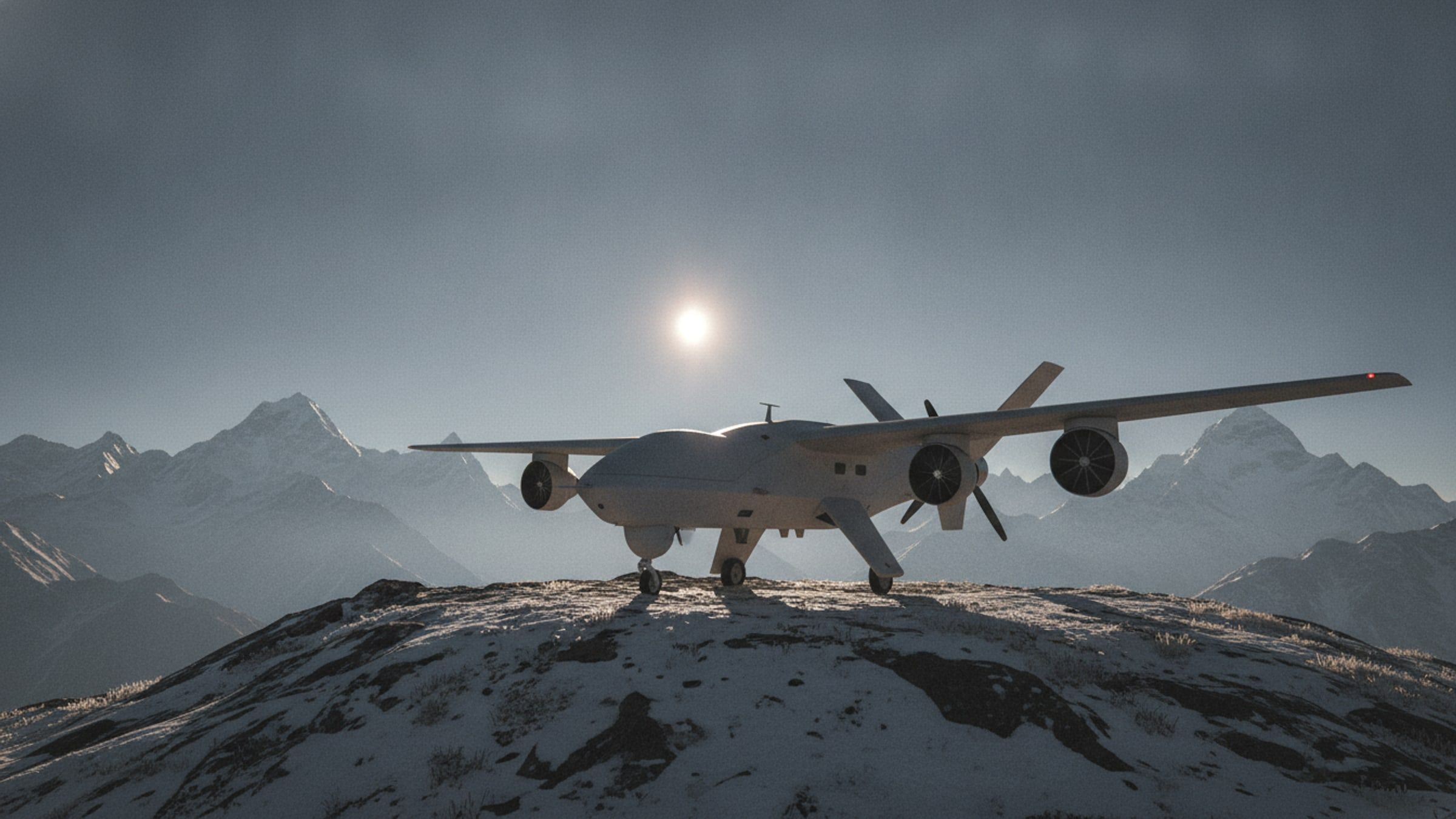
Aerial Systems[ISR-UAV]
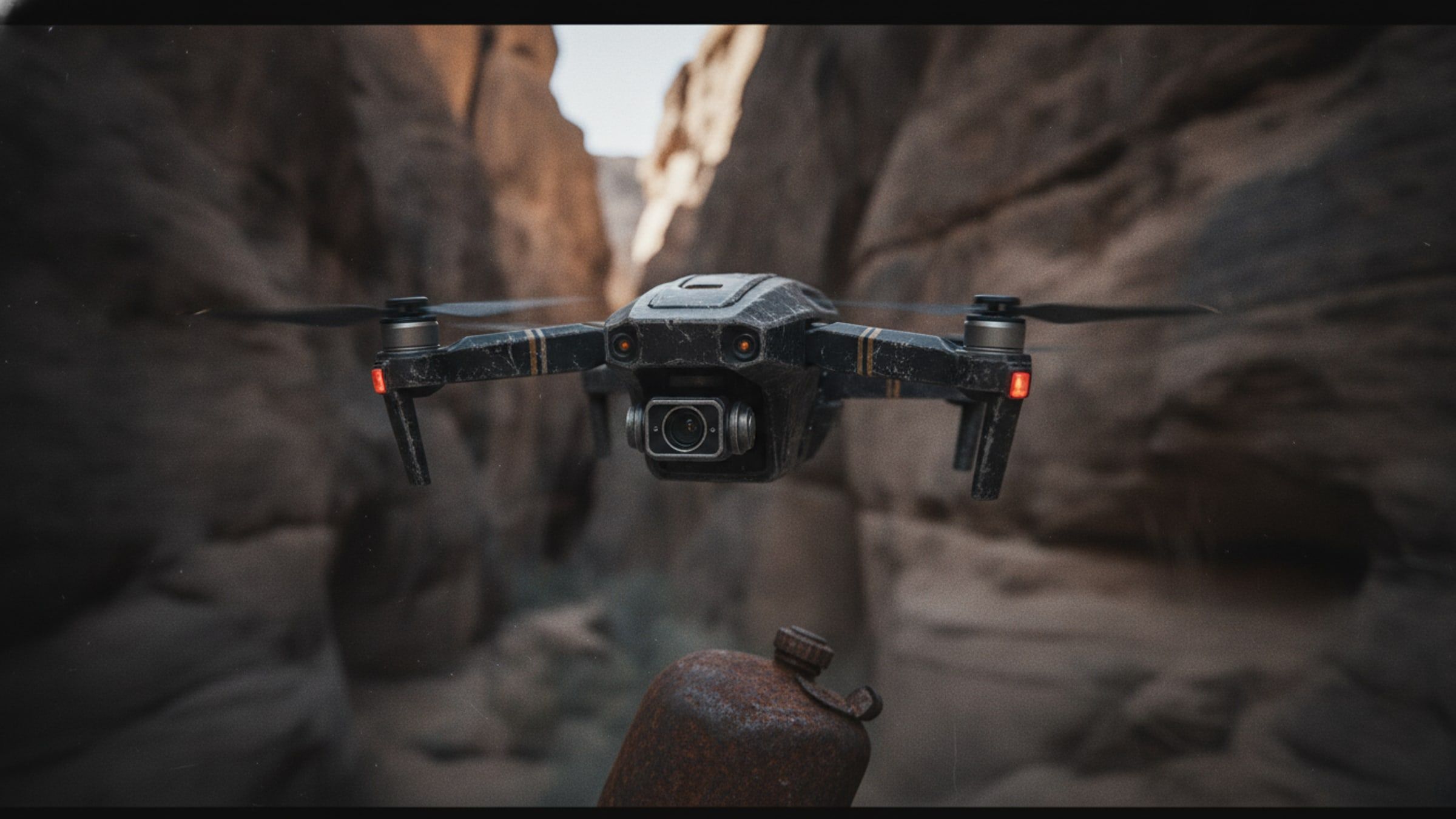
Vertical take-off reconnaissance aircraft built for thin air, extreme cold and launch sites with no runway.
- Service ceiling
- Undisclosed
- Endurance
- Undisclosed
- Operating radius
- Undisclosed
- Operating temperature
- Undisclosed
Overview
Above about three thousand metres the rules change. There is less air to lift against, batteries lose capacity in the cold, and the wind over a ridgeline does not behave like the wind on a plain. An aircraft that performs well at sea level can simply fail to leave the ground at a forward post.
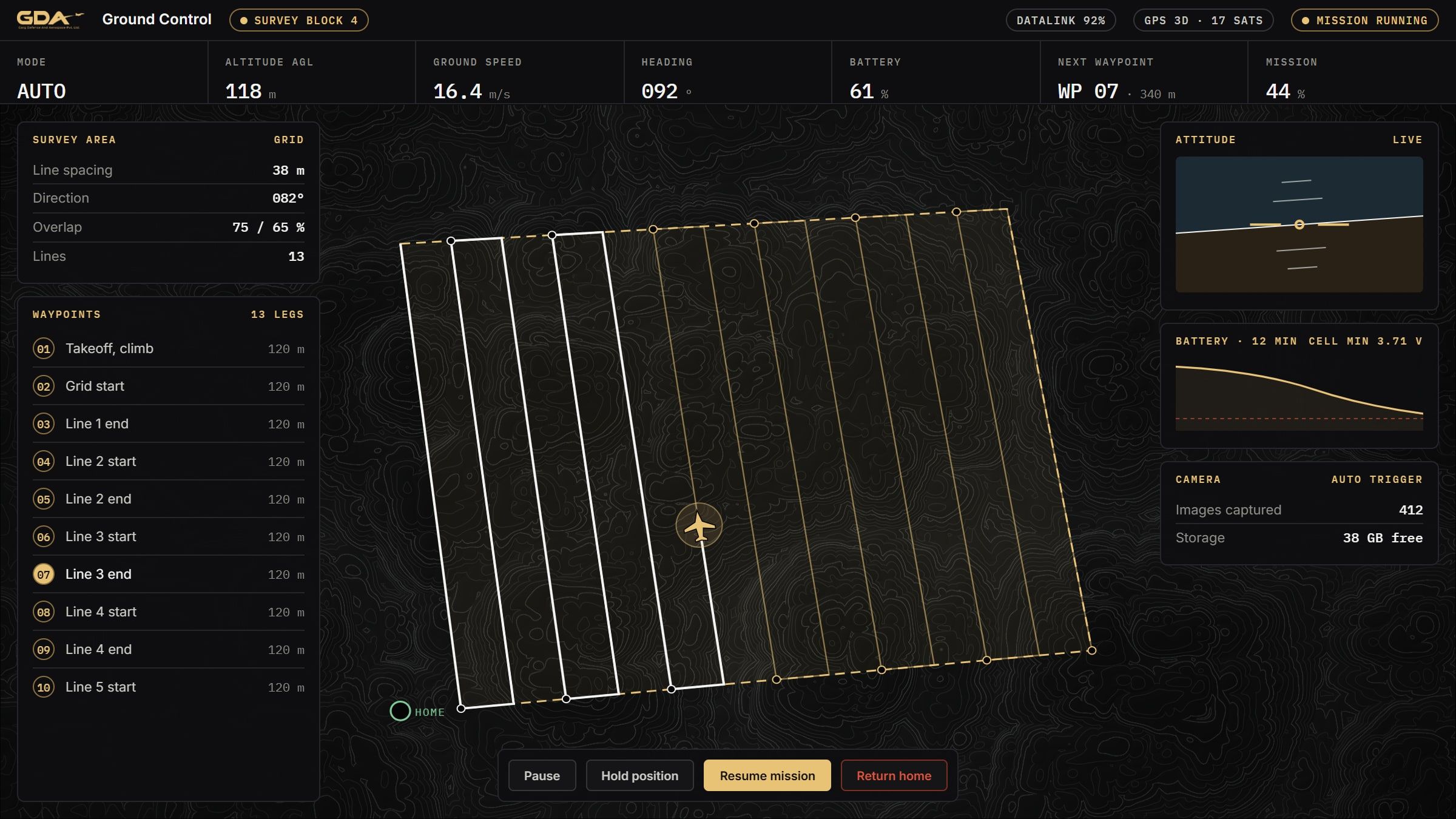
This platform is sized for that case. It lifts vertically from any patch of ground, transitions to wing-borne flight for endurance, and carries a stabilised day and thermal payload with enough optical reach to identify what it finds. Cold-soak starting, thin-air lift margin and de-rated battery behaviour are designed in, not discovered on the day.
System qualities
01 / 05
Lift margin where there is less air
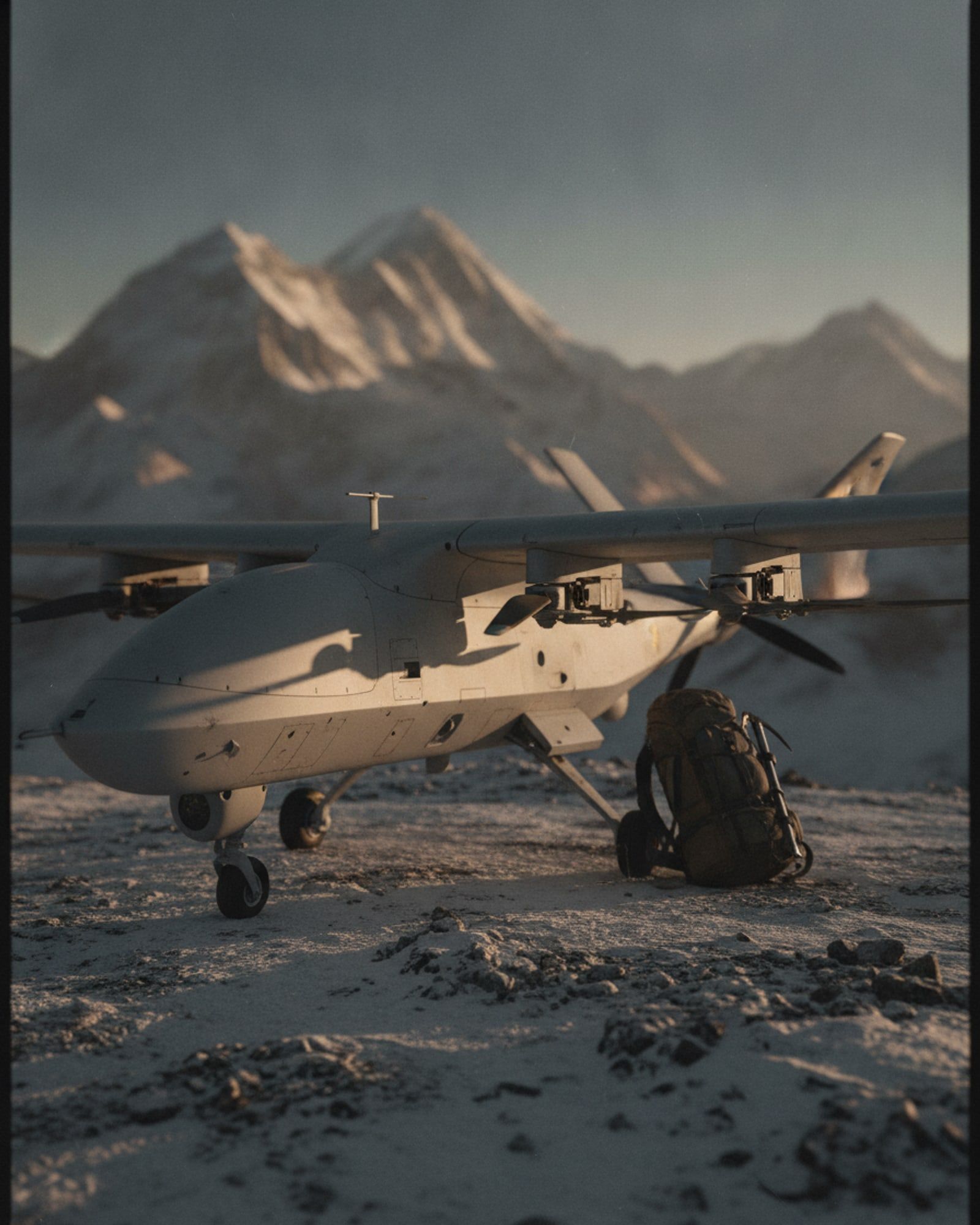
Rotor sizing, wing area and power headroom are set for launch sites well above the altitude at which a standard airframe runs out of margin.
02 / 05
No runway, no launcher
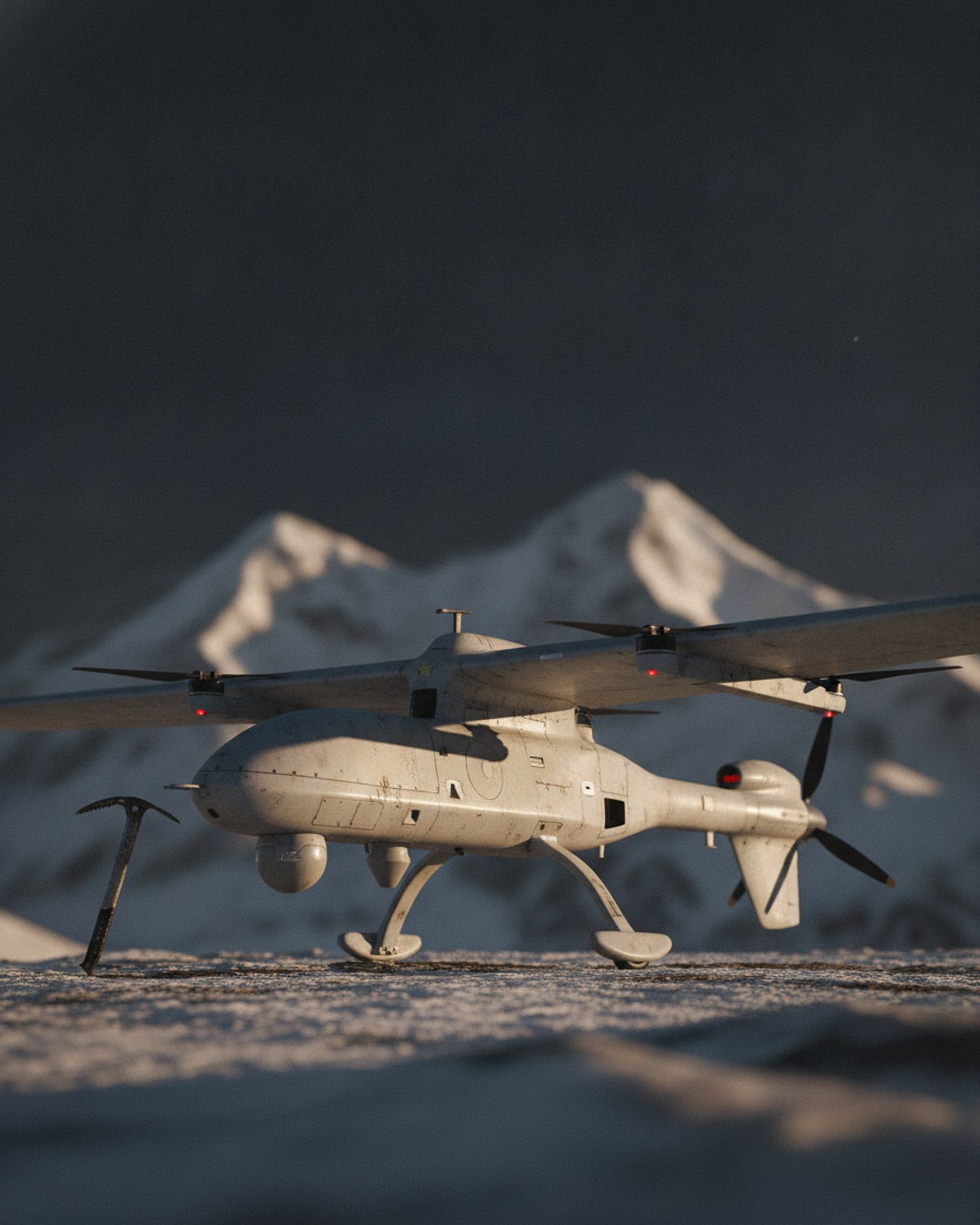
Vertical take-off and landing from a helipad-sized patch of ground, then transition to the wing for range. Recovery is the same in reverse, including onto a slope.
03 / 05
Cold that does not stop it
Batteries are conditioned before launch and the airframe is built to be stored, carried and started cold-soaked rather than warmed up first.
04 / 05
Optical reach that identifies
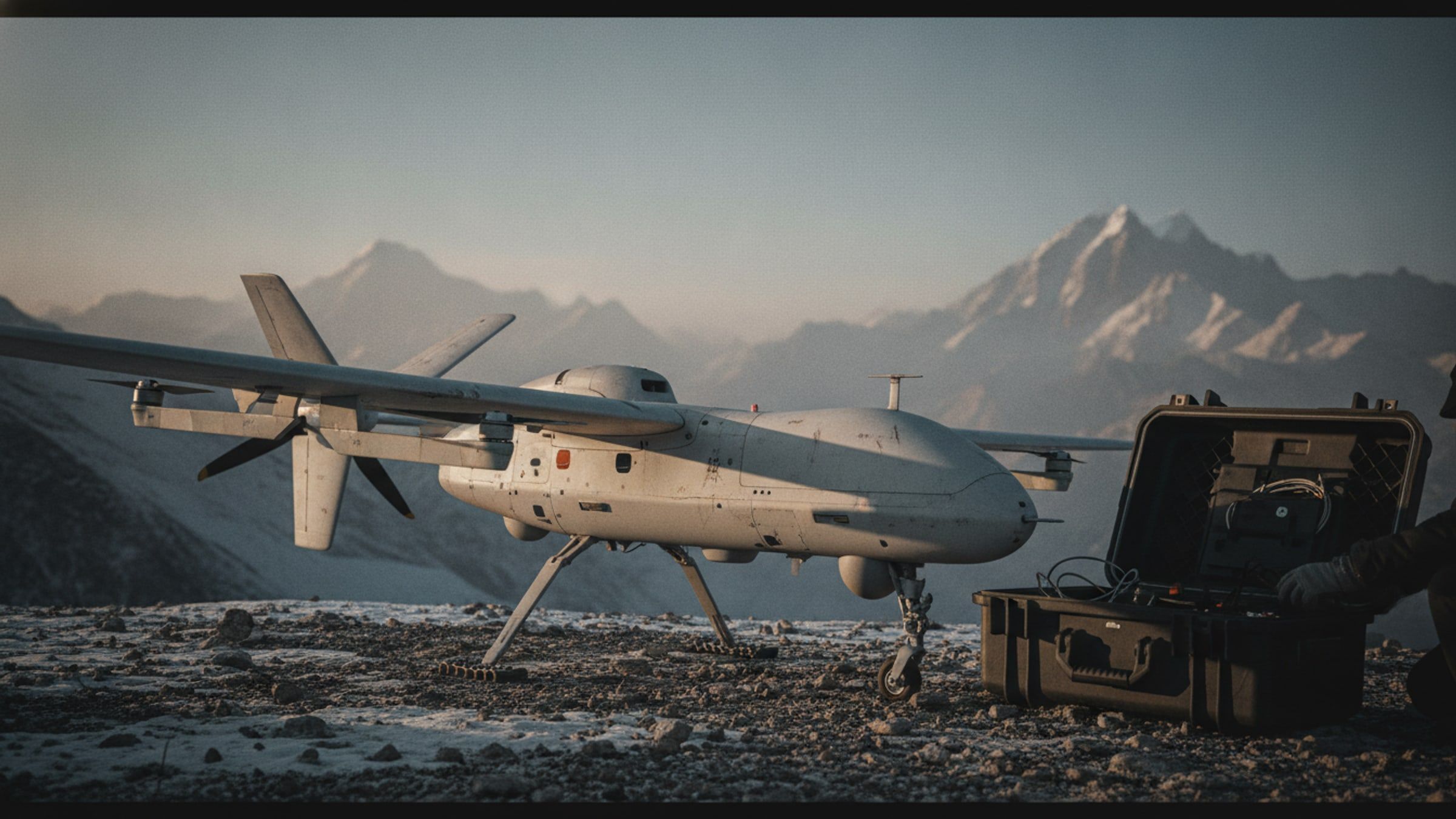
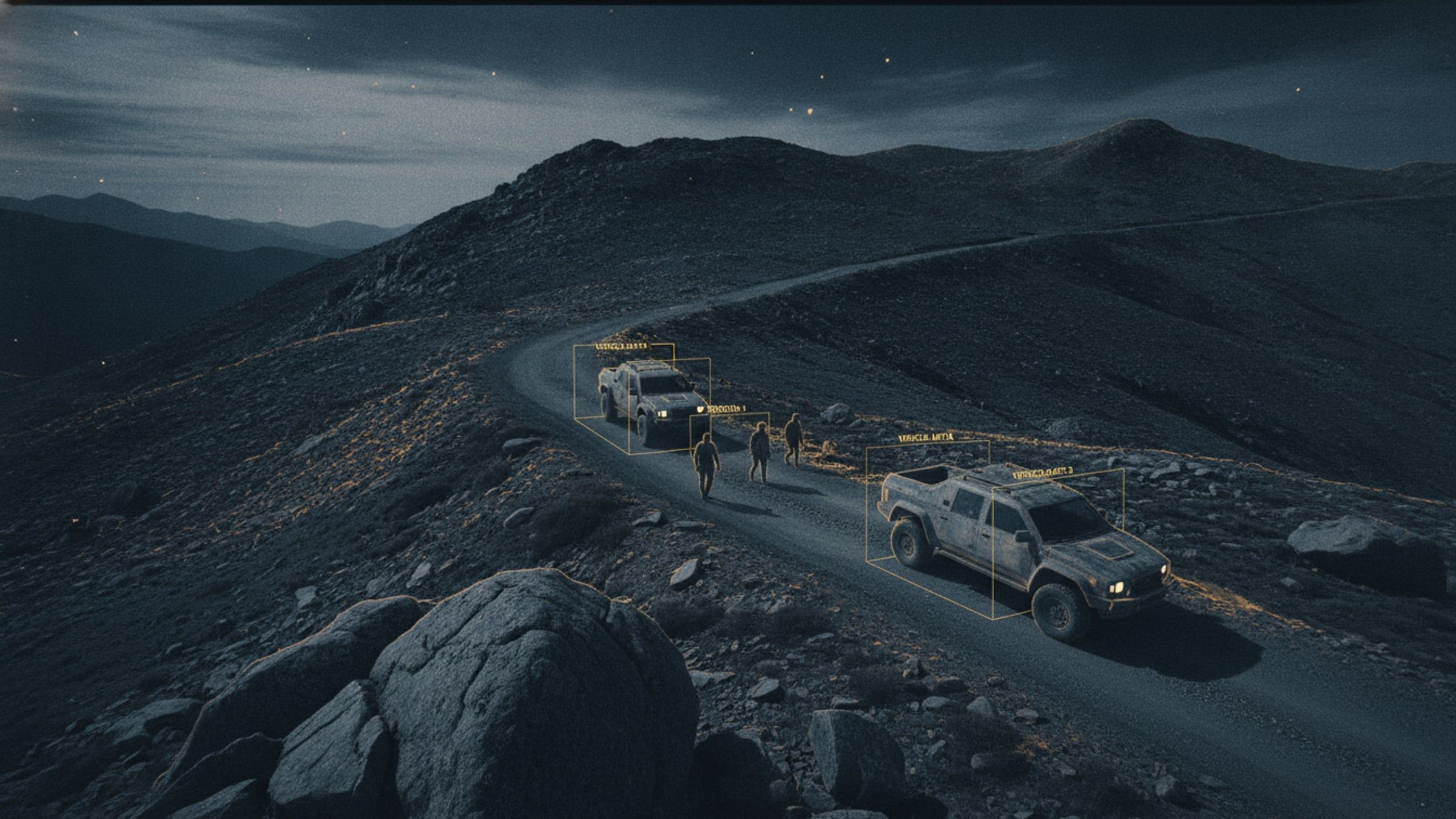
A stabilised day and thermal payload with long optical zoom and a rangefinder turns a detection at distance into an identification.
05 / 05
Encrypted link, graceful loss
The command and video link is encrypted end to end. If it is lost the aircraft continues its task or returns, rather than stopping in place.
Specifications
Figures marked undisclosed or on request are released against a stated requirement.
Airframe
- Configuration
- Vertical take-off fixed wing
- Maximum take-off mass
- Undisclosed
- Construction
- Carbon composite
- Icing protection
- Undisclosed
Performance
- Service ceiling
- Undisclosed
- Endurance
- Undisclosed
- Operating radius
- Undisclosed
- Wind tolerance
- Undisclosed
- Operating temperature
- Undisclosed
- Range, beyond line of sight
- Undisclosed
- Cold start
- Rated for cold-soaked start without pre-warming
Payload
- Electro-optical sensor
- Stabilised, long optical zoom
- Thermal sensor
- Cooled or uncooled, mission dependent
- Laser rangefinder
- Fitted
- Sensor stabilisation
- Multi-axis gimbal
Link
- Command and video
- Encrypted, mesh capable
Launch
- Method
- Vertical, unprepared ground
Recovery
- Method
- Vertical, including onto a slope
Behaviour
- On link loss
- Continue the task, then return
Documentation
- Aerial Systems overviewAvailable on request
Applications
Works with
These are built to operate together, on one network and one picture.
Watch from thin air.