
Application
Logistics and payload delivery
Moving stores to positions and around depots without spending people on the journey.
The problem
Two problems that look different are the same problem. Inside a depot, trained people spend their day moving boxes between fixed points. Outside it, resupplying a forward position costs a party half a day each way on ground that is exposed. Both are journeys that do not need a person to make them.
How it runs
A typical deployment
- 01
Inside the depot, on the map
The rover is driven round once to build a map; afterwards a destination is a name and the vehicle plans its own route.
- 02
Keep it out of where it should not be
Stairs, offices and loading doors are painted onto a keep-out layer that the planner treats as solid.
- 03
Out to the position, by air
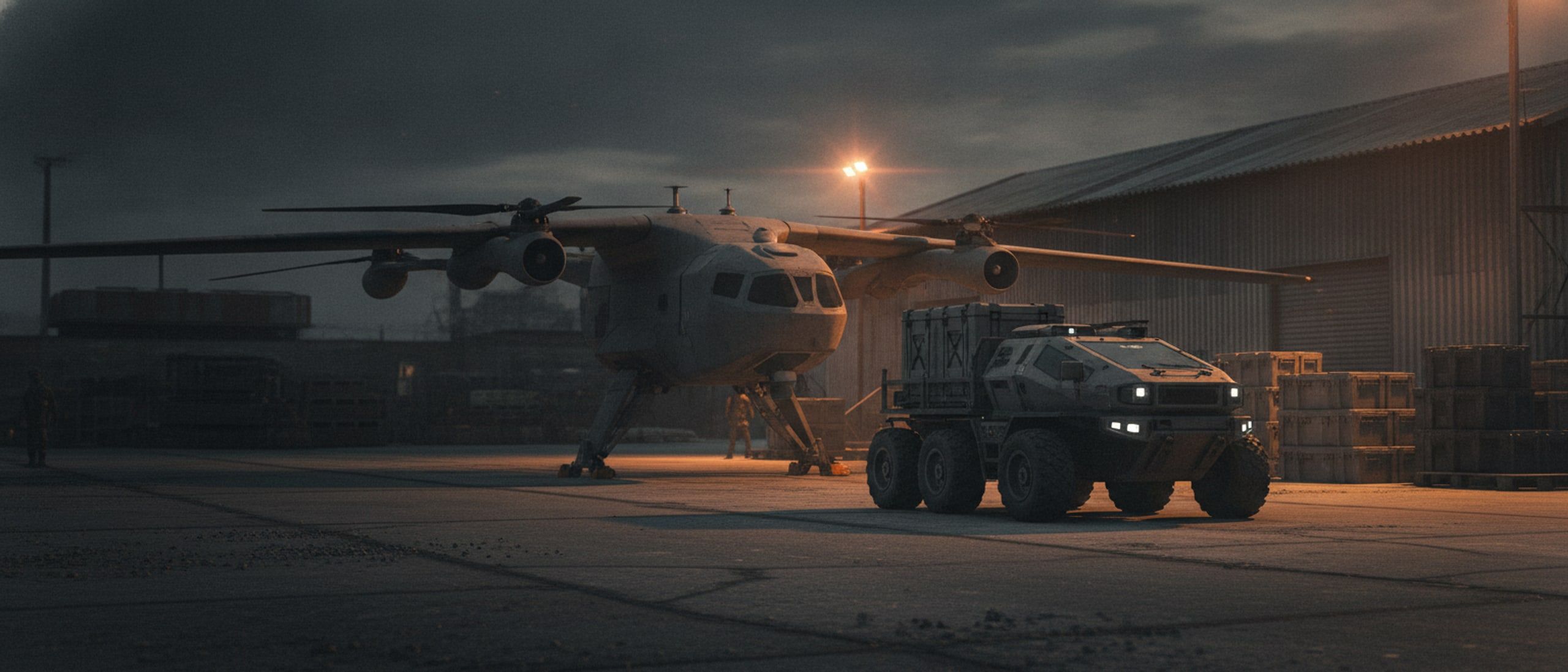
The heavy-lift aircraft carries the load on a powered hook, flies the planned route and either lowers it in the hover or releases on a computed solution.
- 04
Train the release first
The operator has already been scored on that release in the trainer, against the same ballistics and the weather of the actual site.
- 05
Everything logged
Both vehicles report what they carried, where they put it and when, into the same picture.
Systems used
What we would field
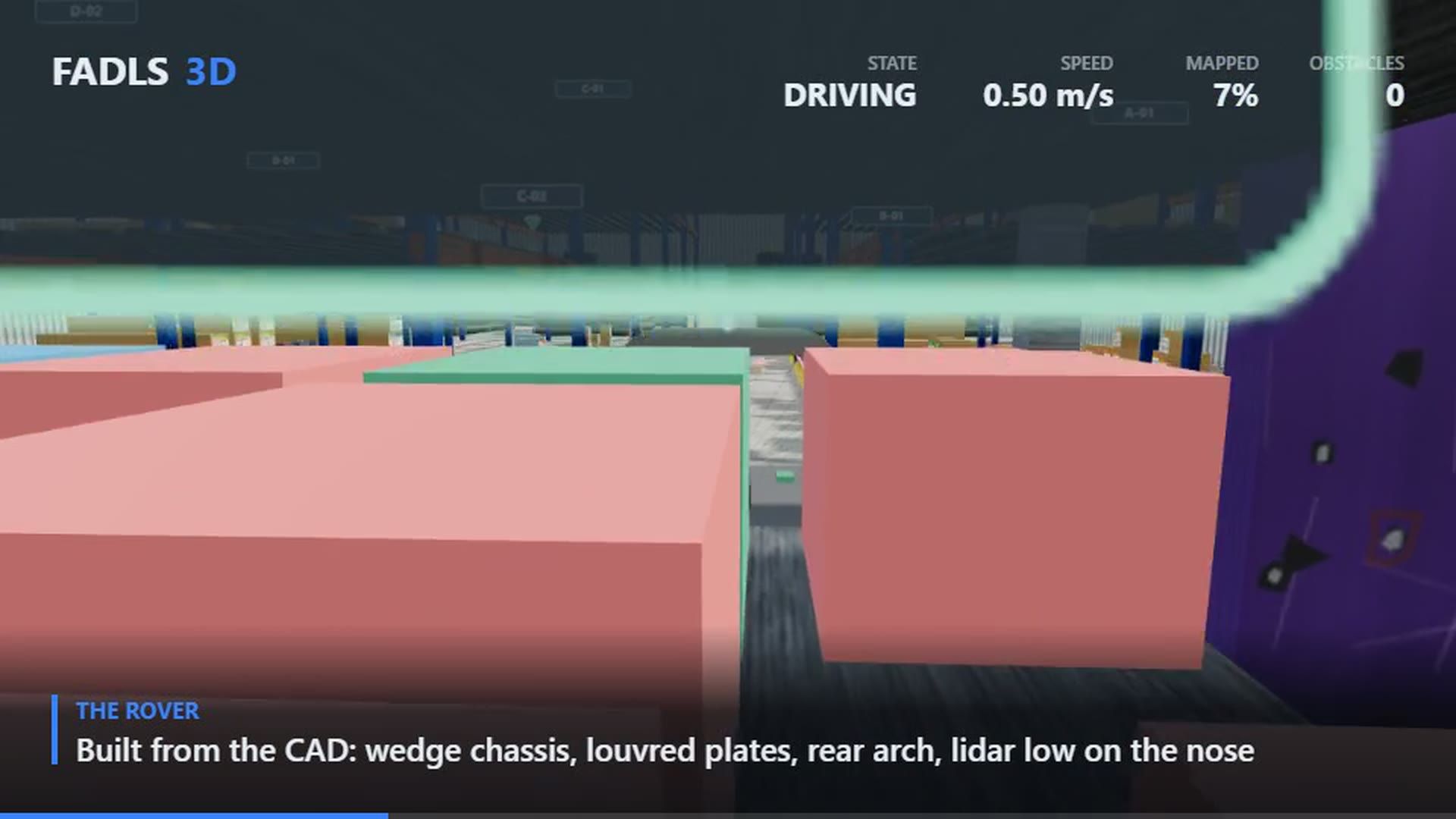
The floor drives itself.
Autonomous Logistics Rover
A skid-steer rover that maps a depot or warehouse once, then carries loads between named points on its own.
[UGV-LOGISTICS]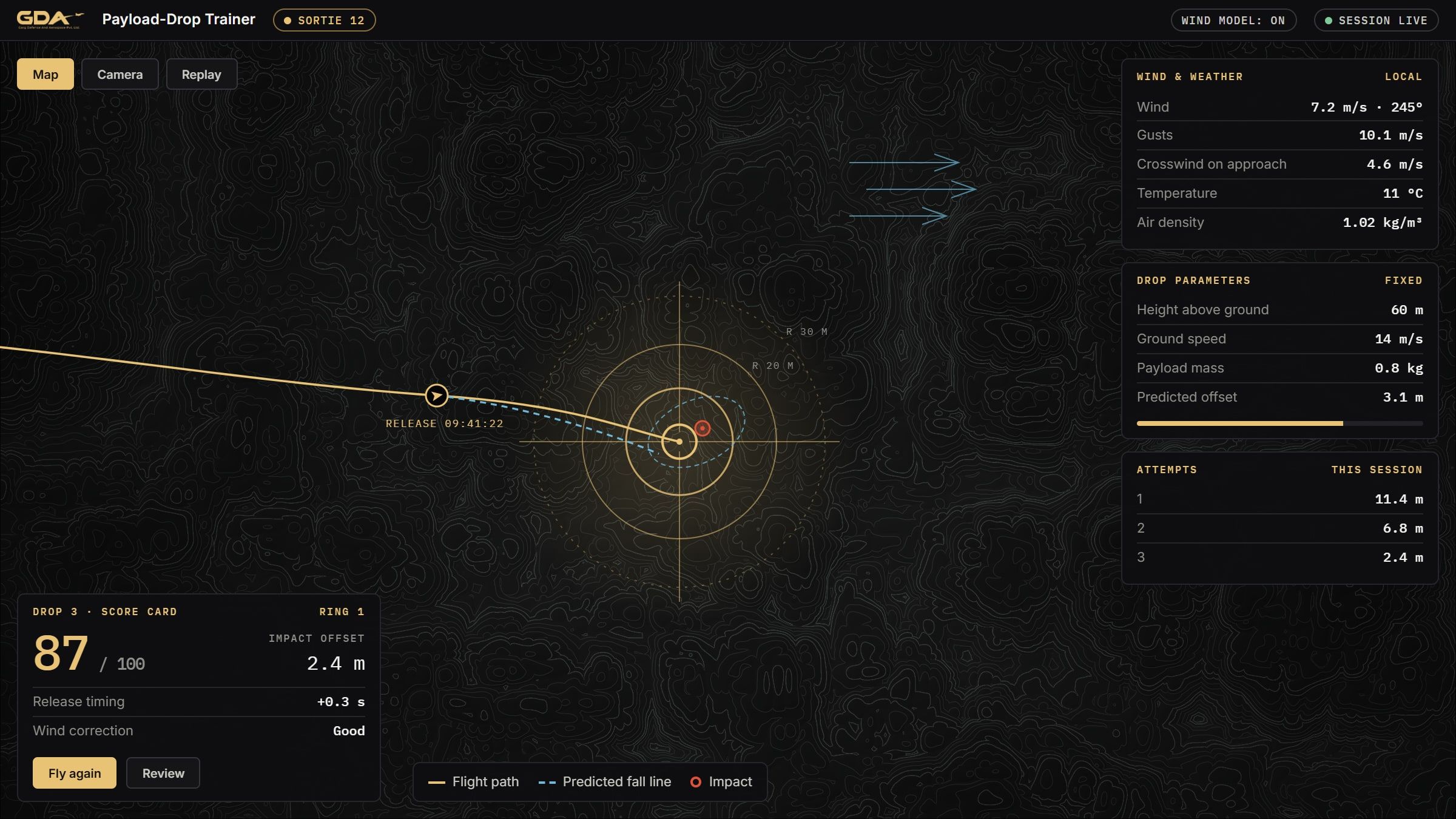
Hit what you aimed at.
UAV Payload-Drop Trainer
A simulator that teaches one thing properly: releasing a load from a drone and hitting what you aimed at.
[SIM-DROP]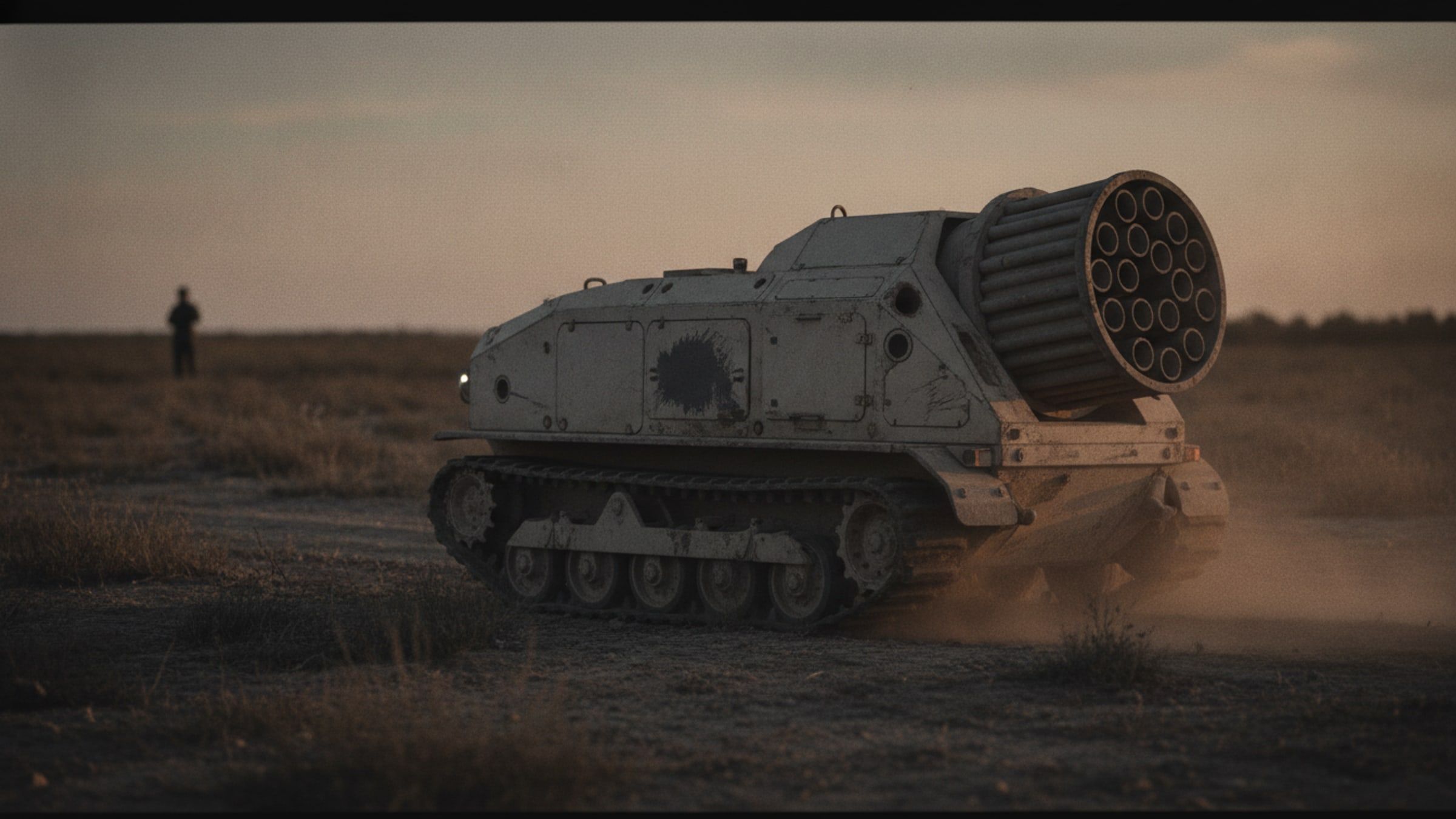
Deny ground at stand-off.
Remote Mine-Laying Rover
A remotely operated tracked vehicle that lays or retrieves stores along a planned line, keeping people out of the area entirely.
[UGV-DENIAL]Next step
Planning for logistics?
Tell us the task, the terrain and the timeline. We will come back with what we would field and what it would take.