Application
Operator readiness
Building and measuring operator skill before an airframe, a payload or a range day is at risk.
The problem
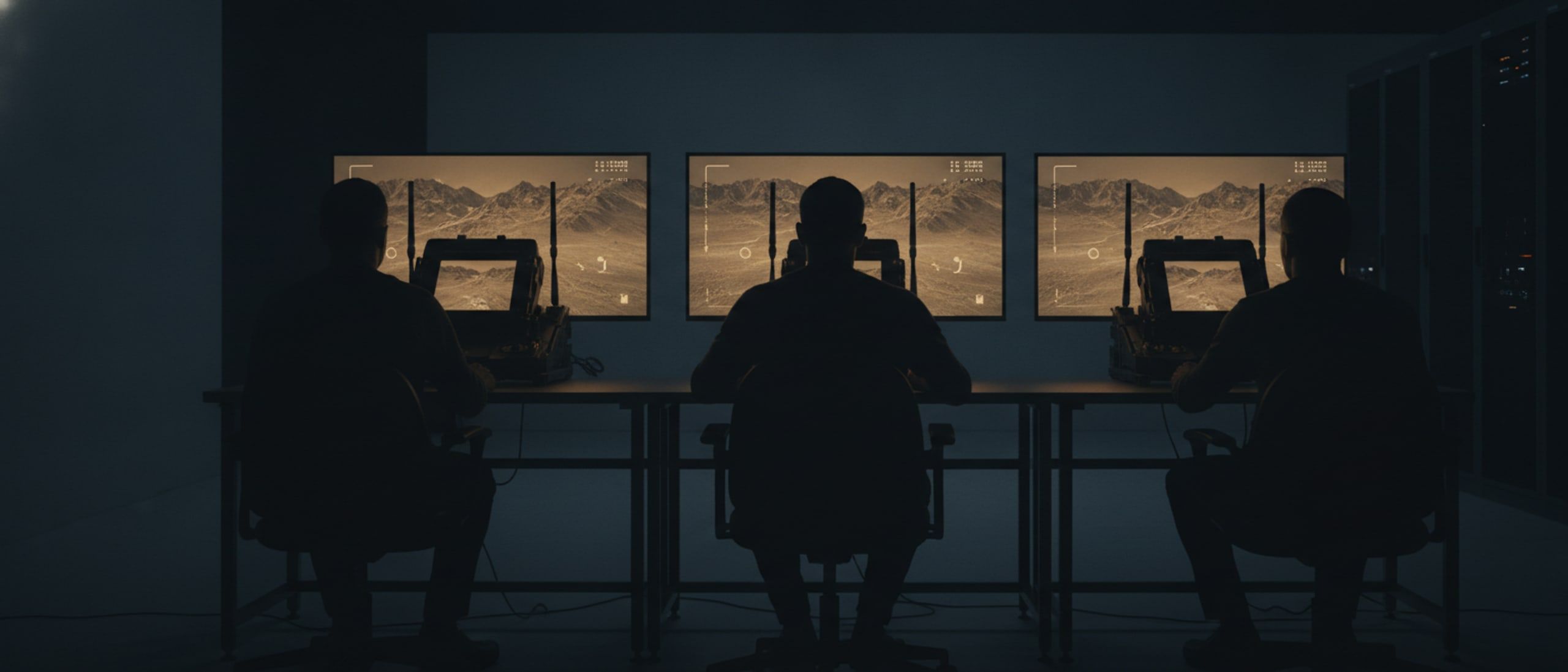
Unmanned systems are bought faster than operators are trained on them. The expensive skills, judging a release, handling a failure, running a fleet, are exactly the ones that are irresponsible to practise on real hardware, and the ones nobody can currently measure. A commander cannot tell from a logbook whether a crew is ready.
How it runs
A typical deployment
- 01
Learn the aircraft on the ground
Basic handling, navigation and mission profiles on the same transmitter and console used operationally.
- 02
Practise what cannot be staged
Link loss, battery failure and degraded navigation are injected deliberately, repeatedly, at no cost.
- 03
Train the judgement
The payload-drop trainer scores each release on miss distance and impact, under the weather of the site the crew will actually fly.
- 04
Rehearse the fleet
Formation flying and fleet tasking are rehearsed on the operational station before any aircraft leaves its case.
- 05
Measure and compare
Every attempt is scored and recorded, so progression is visible across trainees and across months.
Systems used
What we would field
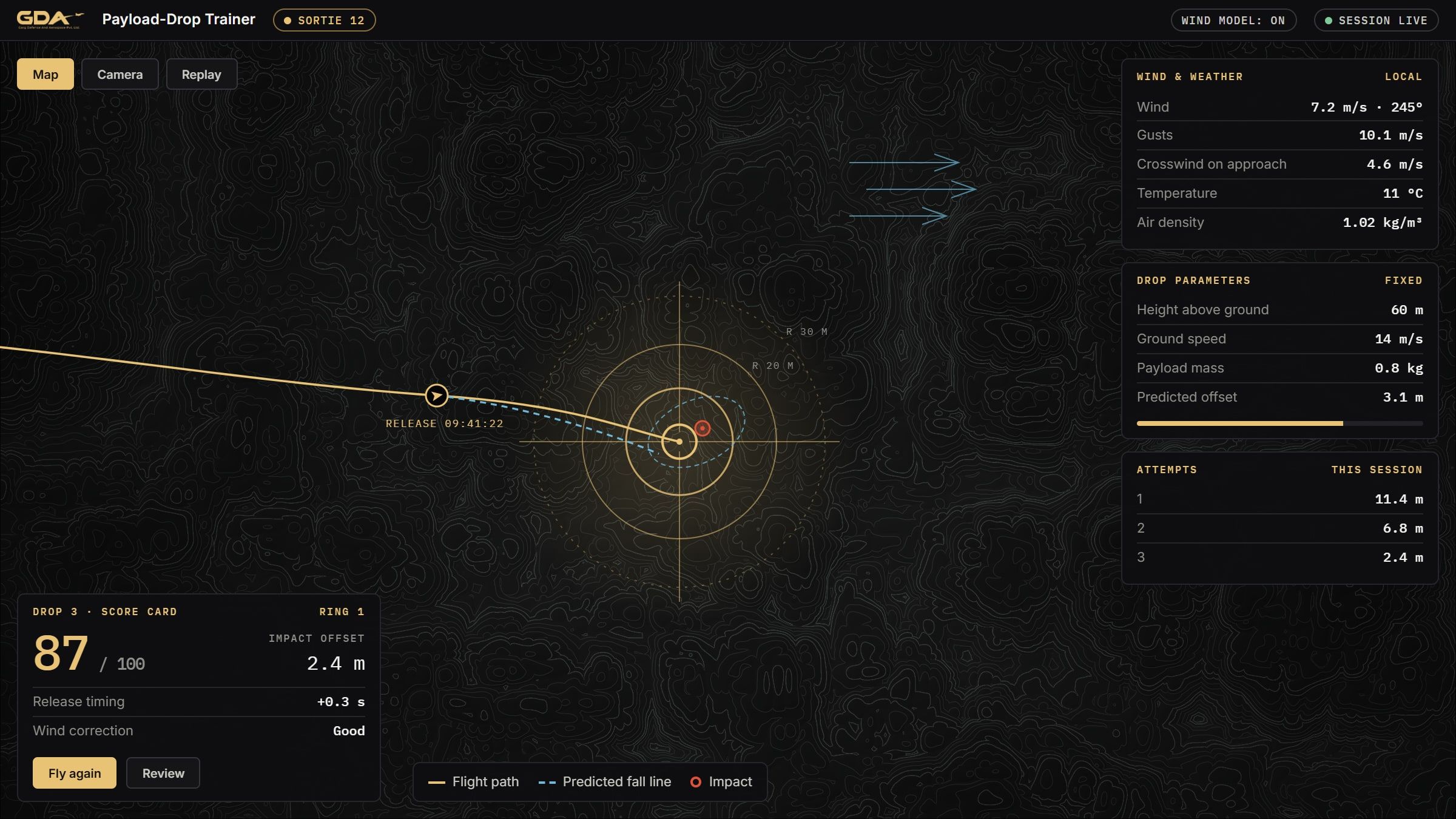
Hit what you aimed at.
UAV Payload-Drop Trainer
A simulator that teaches one thing properly: releasing a load from a drone and hitting what you aimed at.
[SIM-DROP]Rehearse the formation.
Swarm Mission Simulator
Rehearse formation flying and fleet tasking with no aircraft, on the same station used to fly the real thing.
[SIM-SWARM]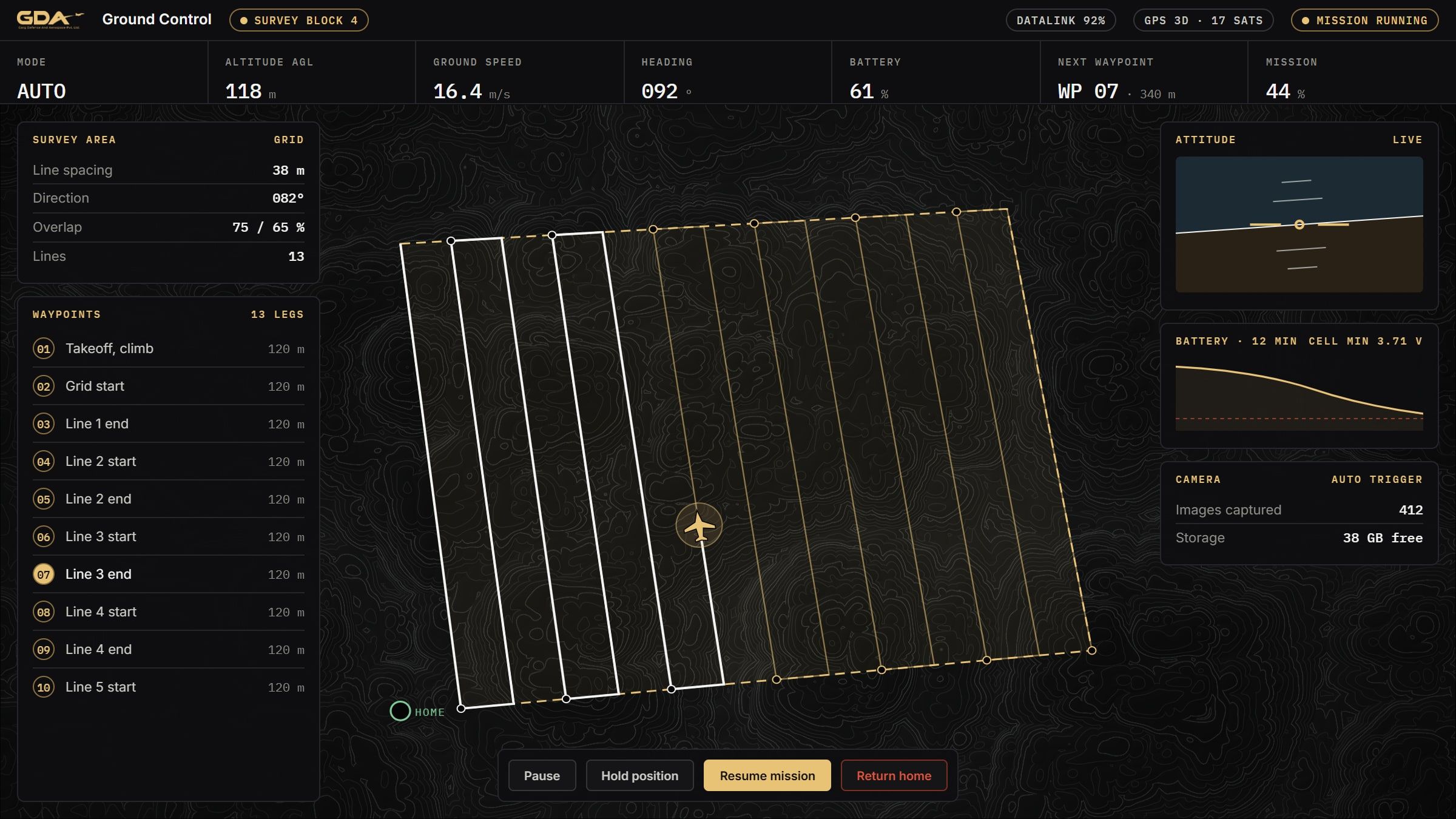
Plan, fly, record.
Ground Control Station Software
A browser-based control station for a single aircraft: mission planning, live telemetry, geofencing and full flight records.
[GCS]Next step
Planning for operator readiness?
Tell us the task, the terrain and the timeline. We will come back with what we would field and what it would take.